Our Location
304 North Cardinal St.
Dorchester Center, MA 02124

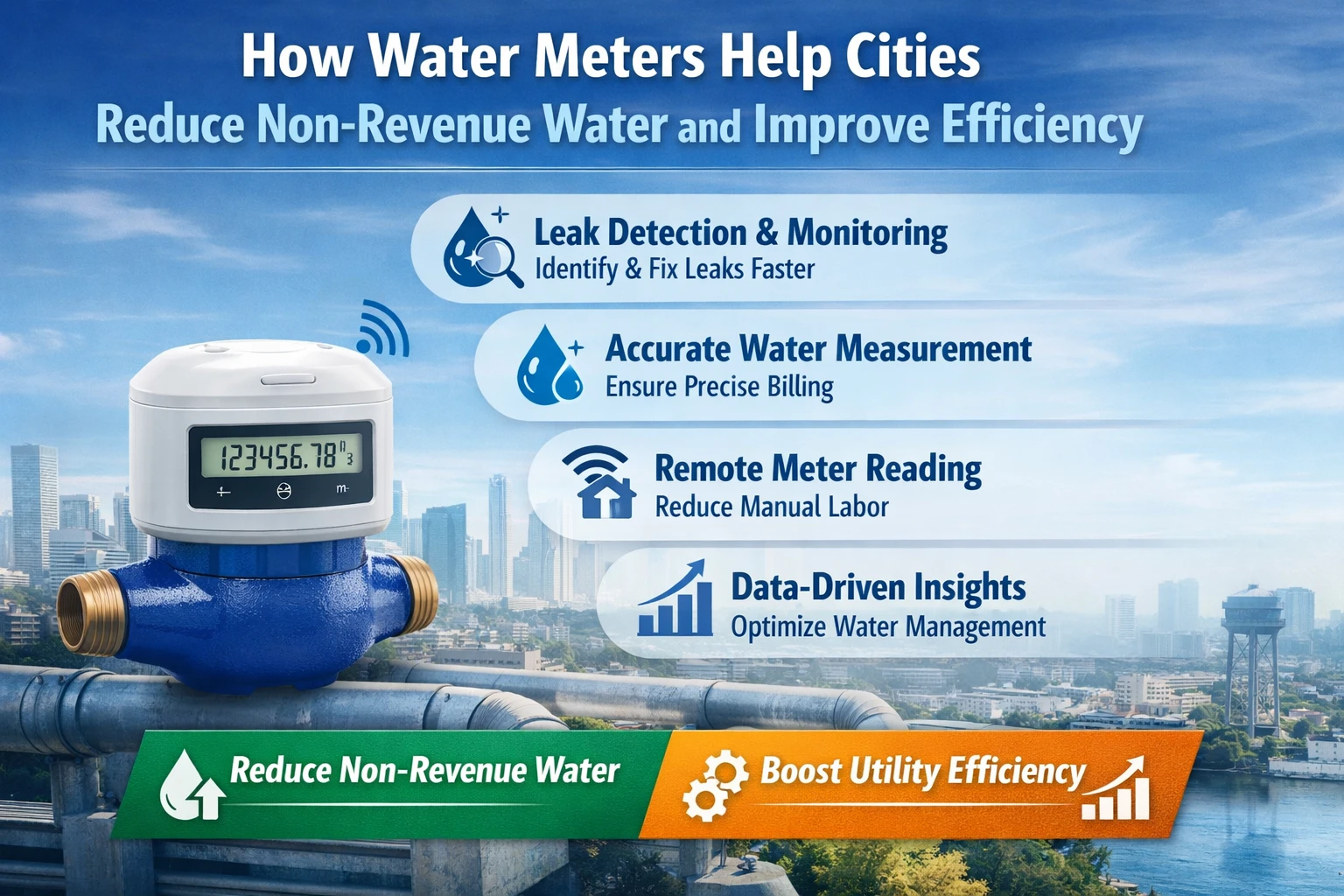
In today’s world, efficient water management is more critical than ever. Urban water utilities face numerous challenges, one of the most significant being non-revenue water (NRW). NRW refers to water that is produced but not billed to customers. It includes water lost due to leaks, theft, or faulty meters, and its high levels represent both an operational inefficiency and a financial burden. In this article, we will explore how advanced water meters can help cities significantly reduce NRW and improve operational efficiency.
Non-revenue water refers to water that has been produced but cannot be sold to consumers. It can result from:
NRW is a massive issue for water utilities because it means they’re losing revenue and wasting valuable water resources. High levels of NRW can increase operational costs, reduce service quality, and ultimately lead to unsustainable water management.
Water meters are an essential tool in the fight against NRW. Here’s how advanced water meters can play a pivotal role in reducing water loss and improving efficiency in urban water systems:
The first step in addressing NRW is to measure it accurately. Traditional mechanical meters can be prone to underreporting, especially in low-flow conditions, which leads to water loss going unnoticed.
With smart water meters such as NB-IoT or LoRaWAN-enabled meters, water utilities can collect real-time data on water usage, pressure, and flow. These meters provide high-accuracy readings, allowing utilities to detect discrepancies that would otherwise go unnoticed.
By providing more accurate data, smart water meters help identify leaks and fraudulent consumption earlier, enabling rapid intervention and reducing unnecessary losses.
One of the most powerful features of smart water meters is their ability to transmit data remotely. Through remote monitoring, utilities can access real-time usage data without needing to send workers out to read meters manually. This not only saves on labor costs but also ensures that data is continuously monitored for anomalies.
Leak detection systems integrated into smart meters allow utilities to quickly identify areas where water is being lost. By detecting leaks early, utilities can prioritize repairs and reduce water wastage.
Traditional mechanical meters often underreport water usage, especially in low-flow conditions. This can lead to inaccurate billing, which means that utilities lose revenue because they’re not charging customers for the full amount of water consumed. On the other hand, overcharging customers due to faulty meters can lead to customer dissatisfaction.
Smart meters solve this problem by providing accurate, real-time data. With this information, water utilities can ensure that bills reflect actual usage, reducing the likelihood of disputes and complaints. Additionally, prepaid meters or smart billing systems can help customers manage their usage and make payments in advance, improving cash flow for utilities.
By investing in smart water meters, utilities can automate many of the processes involved in water management. For instance, automated data collection and remote meter reading eliminate the need for manual inspections, reducing labor costs. Furthermore, utilities can optimize their water distribution systems based on real-time data, improving water flow, and minimizing wastage.
Smart meters can also reduce the time spent on troubleshooting and manual meter reading, helping utilities operate more efficiently.
Data collected from smart water meters enables utilities to make data-driven decisions. For example, analysis of usage patterns can help predict when equipment needs maintenance, allowing for preventive repairs instead of costly emergency fixes.
Furthermore, utilities can use this data to plan for future water demand, optimize water distribution, and develop strategies for reducing NRW.
Cities worldwide are facing increasing pressure to manage water resources sustainably. With the global population rising and climate change exacerbating water scarcity, it’s essential that water utilities maximize the efficiency of their infrastructure. Smart water meters play a key role in this by ensuring that water is metered accurately, leaks are minimized, and resources are used efficiently.
By reducing NRW, water utilities can significantly decrease the amount of water that is wasted. This contributes to more sustainable water usage, which is essential for long-term water availability. In turn, the reduction in water loss helps reduce the need for extensive infrastructure expansion, contributing to cost savings and environmental protection.
Reducing NRW also has direct financial benefits. By improving the accuracy of water measurement, utilities can increase their revenue collection, reinvest in infrastructure, and reduce operational costs. The result is a more financially sustainable water utility system.
Smart water meters are a vital tool in addressing the challenges of non-revenue water and inefficient water management. By improving accuracy, efficiency, and data collection, they enable utilities to reduce water loss, enhance billing practices, and ultimately contribute to the sustainable management of water resources.
Investing in advanced water meter technology is a strategic decision that can help cities improve operational efficiency, reduce costs, and ensure the long-term availability of water resources. As water scarcity continues to be a global challenge, smart water meters represent a necessary step towards a smarter, more sustainable future for urban water management.
Call to Action:
Ready to optimize your water utility system?
Request a quote today and learn how our smart water meters can help you reduce NRW and improve operational efficiency.
